
Contents
- 🔍 Introduction to Louis de Broglie
- 📚 Early Life and Education
- 🎓 The De Broglie Hypothesis
- 🏆 Nobel Prize and Legacy
- 📊 Comparison with Other Theories
- 💡 Practical Applications
- 📝 Tips for Further Study
- 📚 Resources and References
- 👥 Key People and Influences
- 📅 Timeline of Major Events
- Frequently Asked Questions
- Related Topics
Overview
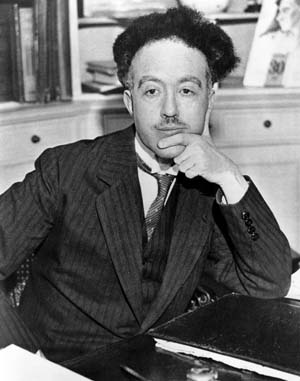
Louis de Broglie was a French physicist who made significant contributions to the field of quantum mechanics. Born on August 15, 1892, in Dieppe, France, de Broglie is best known for his theory of wave-particle duality, which posits that particles such as electrons and photons can exhibit both wave-like and particle-like behavior. This theory, introduced in his 1924 PhD thesis, revolutionized the field of physics and earned him the Nobel Prize in Physics in 1929. De Broglie's work had a profound impact on the development of quantum mechanics, influencing scientists such as Erwin Schrödinger and Werner Heisenberg. His research also explored the concept of pilot waves, which are waves that guide the motion of particles. De Broglie's legacy extends beyond his scientific contributions, as he played a key role in shaping the development of modern physics and inspiring future generations of scientists.
🔍 Introduction to Louis de Broglie
Louis de Broglie was a French theoretical physicist and aristocrat who made significant contributions to quantum theory. Born into an aristocratic family, de Broglie's interest in physics was sparked at a young age, and he went on to study physics at the University of Paris. His work on the wave nature of electrons, as outlined in his 1924 Ph.D. thesis, revolutionized the field of physics and earned him the Nobel Prize in Physics in 1929. De Broglie's hypothesis, which suggests that all matter has wave properties, is a fundamental concept in quantum mechanics and has been experimentally confirmed by scientists such as George Paget Thomson and Clinton Davisson.
📚 Early Life and Education
De Broglie's early life and education played a significant role in shaping his future as a physicist. He was born in Dieppe, France, and was educated at the Lycée Janson de Sailly in Paris. De Broglie's interest in physics was encouraged by his brother, Maurice de Broglie, who was also a physicist. De Broglie went on to study physics at the University of Paris, where he earned his Ph.D. in 1924. His thesis, which outlined the de Broglie hypothesis, was a groundbreaking work that challenged the existing understanding of the nature of matter and energy. For more information on de Broglie's early life, see the biography of Louis de Broglie.
🎓 The De Broglie Hypothesis
The de Broglie hypothesis is a fundamental concept in quantum mechanics that suggests that all matter has wave properties. This concept is an example of wave-particle duality, which proposes that particles, such as electrons, can exhibit both wave-like and particle-like behavior. De Broglie's hypothesis was a major breakthrough in the development of quantum theory and has been experimentally confirmed by numerous scientists, including Ernest Rutherford and Niels Bohr. The de Broglie hypothesis has far-reaching implications for our understanding of the behavior of matter and energy at the atomic and subatomic level. To learn more about the de Broglie hypothesis, see the de Broglie hypothesis page.
🏆 Nobel Prize and Legacy
De Broglie's work on the wave nature of electrons earned him the Nobel Prize in Physics in 1929. This prestigious award recognized de Broglie's significant contributions to the field of physics and cemented his place as one of the most important physicists of the 20th century. De Broglie's legacy extends far beyond his own work, as his hypothesis has had a profound impact on the development of quantum mechanics and our understanding of the behavior of matter and energy. For more information on de Broglie's Nobel Prize, see the Nobel Prize in Physics page.
📊 Comparison with Other Theories
De Broglie's hypothesis can be compared to other theories, such as classical mechanics and relativity. While these theories provide a framework for understanding the behavior of macroscopic objects, they are unable to explain the behavior of particles at the atomic and subatomic level. In contrast, de Broglie's hypothesis provides a framework for understanding the wave-like behavior of particles, which is a fundamental aspect of quantum mechanics. For more information on the comparison between de Broglie's hypothesis and other theories, see the comparison of physics theories page.
💡 Practical Applications
The de Broglie hypothesis has numerous practical applications in fields such as materials science and electronics. For example, the understanding of the wave-like behavior of electrons has led to the development of transistors and other electronic devices. Additionally, the de Broglie hypothesis has implications for our understanding of the behavior of particles in particle accelerators, which are used in a variety of applications, including medical research and high energy physics. To learn more about the practical applications of the de Broglie hypothesis, see the practical applications of quantum mechanics page.
📝 Tips for Further Study
For those interested in studying the de Broglie hypothesis in more detail, there are several resources available. The University of Paris offers a range of courses on quantum mechanics and quantum theory, which provide a comprehensive introduction to the subject. Additionally, there are numerous online resources, such as the Khan Academy and MIT OpenCourseWare, which offer a range of lectures and tutorials on quantum mechanics and quantum theory. For more information on these resources, see the resources for learning quantum mechanics page.
📚 Resources and References
De Broglie's work was influenced by a number of key people, including his brother, Maurice de Broglie, and other prominent physicists, such as Ernest Rutherford and Niels Bohr. De Broglie's hypothesis was also influenced by the work of Max Planck and Albert Einstein, who made significant contributions to the development of quantum theory. For more information on the key people who influenced de Broglie's work, see the influences on Louis de Broglie page.
👥 Key People and Influences
The timeline of major events in de Broglie's life and career is a fascinating one. Born in 1892, de Broglie studied physics at the University of Paris and earned his Ph.D. in 1924. His thesis, which outlined the de Broglie hypothesis, was a groundbreaking work that challenged the existing understanding of the nature of matter and energy. De Broglie's work on the wave nature of electrons earned him the Nobel Prize in Physics in 1929, and he went on to make significant contributions to the development of quantum mechanics and quantum theory. For more information on the timeline of de Broglie's life and career, see the biography of Louis de Broglie.
📅 Timeline of Major Events
In conclusion, Louis de Broglie was a French theoretical physicist and aristocrat who made significant contributions to quantum theory. His hypothesis, which suggests that all matter has wave properties, is a fundamental concept in quantum mechanics and has had a profound impact on our understanding of the behavior of matter and energy. For more information on de Broglie's life and work, see the biography of Louis de Broglie. To get started with learning more about de Broglie's hypothesis and its applications, see the practical applications of quantum mechanics page.
Key Facts
- Year
- 1924
- Origin
- France
- Category
- Physics
- Type
- Person
Frequently Asked Questions
What is the de Broglie hypothesis?
The de Broglie hypothesis is a fundamental concept in quantum mechanics that suggests that all matter has wave properties. This concept is an example of wave-particle duality, which proposes that particles, such as electrons, can exhibit both wave-like and particle-like behavior. The de Broglie hypothesis was first proposed by Louis de Broglie in his 1924 Ph.D. thesis and has since been experimentally confirmed by numerous scientists.
Who was Louis de Broglie?
Louis de Broglie was a French theoretical physicist and aristocrat who made significant contributions to quantum theory. He was born in 1892 and studied physics at the University of Paris, where he earned his Ph.D. in 1924. De Broglie's work on the wave nature of electrons earned him the Nobel Prize in Physics in 1929, and he went on to make significant contributions to the development of quantum mechanics and quantum theory.
What are the practical applications of the de Broglie hypothesis?
The de Broglie hypothesis has numerous practical applications in fields such as materials science and electronics. For example, the understanding of the wave-like behavior of electrons has led to the development of transistors and other electronic devices. Additionally, the de Broglie hypothesis has implications for our understanding of the behavior of particles in particle accelerators, which are used in a variety of applications, including medical research and high energy physics.
How did de Broglie's work influence the development of quantum mechanics?
De Broglie's work on the wave nature of electrons was a major breakthrough in the development of quantum mechanics. His hypothesis, which suggests that all matter has wave properties, provided a framework for understanding the behavior of particles at the atomic and subatomic level. De Broglie's work influenced a number of other prominent physicists, including Ernest Rutherford and Niels Bohr, and his hypothesis has had a profound impact on our understanding of the behavior of matter and energy.
What is the significance of the Nobel Prize in Physics awarded to de Broglie?
The Nobel Prize in Physics awarded to de Broglie in 1929 recognized his significant contributions to the field of physics and cemented his place as one of the most important physicists of the 20th century. The award was a testament to the importance of de Broglie's work on the wave nature of electrons and its impact on the development of quantum mechanics and quantum theory.
How can I learn more about the de Broglie hypothesis and its applications?
There are a number of resources available for learning more about the de Broglie hypothesis and its applications. The University of Paris offers a range of courses on quantum mechanics and quantum theory, which provide a comprehensive introduction to the subject. Additionally, there are numerous online resources, such as the Khan Academy and MIT OpenCourseWare, which offer a range of lectures and tutorials on quantum mechanics and quantum theory.
What are some of the key challenges and limitations of the de Broglie hypothesis?
While the de Broglie hypothesis has been incredibly successful in explaining the behavior of particles at the atomic and subatomic level, there are still a number of challenges and limitations to the theory. One of the main challenges is the difficulty in measuring the wave-like behavior of particles, which requires highly sophisticated equipment and techniques. Additionally, the de Broglie hypothesis is not able to explain the behavior of particles at very high energies, which is an area of ongoing research and development.